
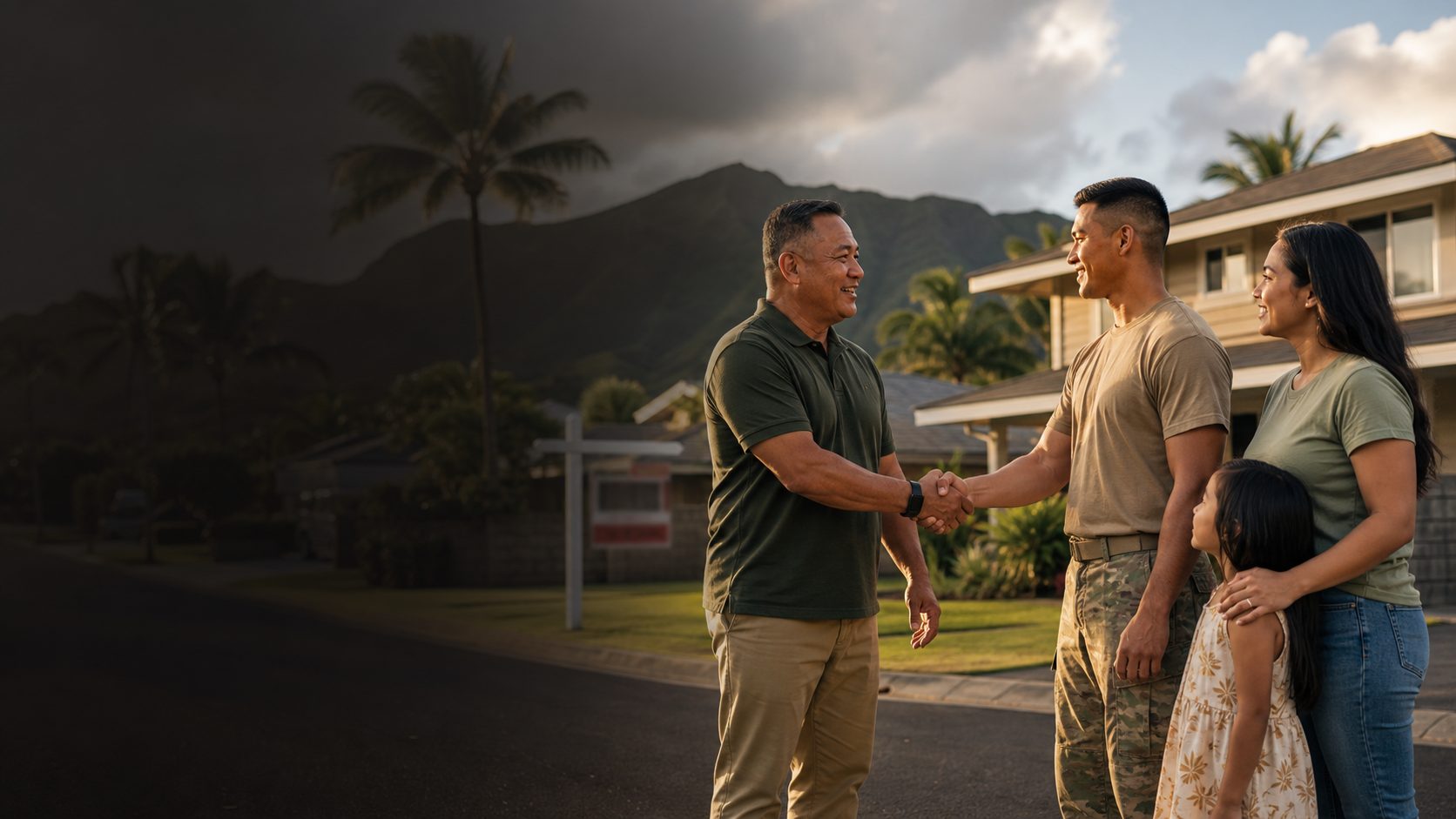
VA Loan Information page for Hawaii VA buyers
Oahu VA Buyer Guide

VA Loan Information

A VA-backed loan can be a powerful way to buy on Oahu, but the benefit, the lender approval, and the property approval are three different questions. Connect all three before a short PCS timeline or a favorite home forces the decision.

From Benefit to Property

How to prepare for a VA-financed home purchase on Oahu

Use your VA benefit as part of a complete buying plan—not as a substitute for budget, property, and contract due diligence.

VA loan eligibility is the starting point. The U.S. Department of Veterans Affairs says a buyer needs a qualifying Certificate of Eligibility, must satisfy VA and lender credit and income standards, and must intend to live in the home. A private lender—not VA—reviews the loan application, sets the rate and many fees, and decides how much the borrower can afford.

That distinction matters in Hawaii. A Certificate of Eligibility does not make a particular price comfortable, guarantee that a condominium project is acceptable, or tell you how association dues, insurance, taxes, utilities, and commuting will affect your monthly life. It also does not replace an appraisal, inspection, title review, association-document review, or the advice of qualified lending and legal professionals.

The practical sequence is to confirm the benefit and entitlement, compare VA-experienced lenders, establish a payment and cash-to-close range, and then screen Oahu properties against both household needs and financing requirements. This page explains the real-estate decisions in that sequence. Your lender and VA remain the sources for your eligibility, underwriting, entitlement, and loan terms.

Confirm eligibility, entitlement, and lender approval separately

Start by obtaining or updating your Certificate of Eligibility. The COE shows the lender that you qualify based on service history and duty status and indicates entitlement information. It is not a loan approval. VA states that both VA and the lender have credit, income, and occupancy requirements, so a lender still needs to review income, debts, assets, credit history, and the intended home as part of underwriting.

Ask the lender to explain whether your COE reflects full entitlement or entitlement already charged to another VA loan. VA says buyers with full entitlement do not have a county loan limit, but that does not create unlimited borrowing power: the lender must approve the amount, and the maximum VA loan on a property is constrained by the lower of purchase price or appraised value. When entitlement has been used and not restored, the applicable county conforming limit helps determine the remaining guaranty and whether a down payment may be needed.

A useful preapproval should match your actual Oahu plan. Tell the lender about association dues, expected property type, other housing obligations, anticipated move date, and funds that must remain available for travel, temporary lodging, vehicles, inspections, and repairs. Compare written Loan Estimates when available, and ask each lender which assumptions could change the payment or cash needed at closing. A headline approval ceiling is not the same as a sustainable search budget.

COEEntitlementPreapprovalOccupancy

Build an Oahu payment from the whole property

VA-backed purchase loans often allow no down payment when the sales price does not exceed the appraised value, and VA says they do not require monthly private mortgage insurance. Those are important advantages, but zero down does not mean zero cash or low ownership cost. Buyers may still need funds for inspections, appraisal, permissible closing charges, prepaid items, moving expenses, and any amount the transaction does not finance or another party does not pay.

For an Oahu condo or planned-community home, add maintenance or association dues to the lender's principal, interest, tax, and insurance estimate. Then investigate what the dues cover, likely special assessments, parking, utilities, reserves, master insurance, and building obligations. For a detached home, create a repair reserve for roof, exterior, drainage, cooling, appliances, and other condition items. Two properties at the same price can produce very different monthly and first-year costs.

The VA funding fee is another property-independent cost to resolve early. VA describes it as a one-time charge unless the borrower qualifies for an exemption; the rate depends on loan type, down payment, and whether the benefit has been used before. The fee can generally be financed or paid at closing, but financing it increases the loan balance. Other purchase closing costs generally cannot simply be rolled into the VA loan. Ask the lender to verify exemption status and show side-by-side cash-to-close and payment scenarios rather than relying on a generic online estimate.

Monthly CostAssociation DuesInsuranceReserves

Screen condos and property condition before you offer

Condominiums and townhomes are a major part of many Oahu searches, but the unit and the project are separate review subjects. VA identifies a condominium unit in a VA-approved project as an eligible use of a purchase loan. Have the lender verify the exact legal project name and current approval status early; a similar marketing name, neighboring phase, or prior VA-financed sale is not enough by itself. Also review association documents, budgets, insurance, reserves, litigation disclosures, assessments, leasehold terms if any, and lender-specific requirements.

Every candidate property also needs condition screening. A VA-approved appraiser provides an opinion of value and checks VA minimum property requirements. VA expressly distinguishes that appraisal from a home inspection and strongly recommends an inspection for major defects. An appraiser does not perform the buyer's broad condition investigation, promise future performance, or determine whether the home's maintenance burden suits the household.

Before writing, look for condition issues that may affect financing, timing, insurance, or willingness to proceed. Ask how the contract handles inspections, appraisal, repairs, association documents, title, and financing. If a likely repair could affect minimum property requirements, discuss it with the lender and agent before selecting deadlines or promising a closing schedule. Do not assume that cosmetic quality proves VA acceptability—or that an older home is automatically ineligible.

VA Condo ApprovalMPRsInspectionDocuments

Write an offer that respects appraisal and PCS timing

A competitive offer is not simply the highest number. It is a package of price, financing, deposits, deadlines, requested credits, property condition, and closing logistics that the household can actually perform. Your agent should confirm current local forms and strategy, while your lender should confirm realistic underwriting and appraisal milestones. Build extra coordination time when orders, occupancy, document access, or a remote signing could complicate the schedule.

VA explains that the appraisal supports both value and minimum property requirements. If value does not support the contract price, VA describes options that may include a Reconsideration of Value, renegotiation, paying the difference from the buyer's own resources, or using the VA appraisal-related contract protection. The right response depends on the contract, available cash, lender direction, and whether the property still makes sense. Decide before offering how much appraisal gap—if any—you could responsibly absorb without draining arrival and repair reserves.

Keep inspection and appraisal concepts separate. A home can appraise at the contract price and still have defects or maintenance risks that matter to you; it can also be livable yet appraise below the agreed price. Review contingencies with your agent and obtain legal advice when needed. Removing protections only to make an offer look stronger can transfer substantial risk to a buyer whose move timeline and liquid funds are already constrained.

AppraisalEscape ClauseContingenciesTimeline

Use a disciplined pre-tour and pre-offer checklist

Before touring, confirm the duty and spouse commute pattern, acceptable property types, target all-in payment, available closing funds, required reserve, intended occupancy, and COE or entitlement questions. For each listing, record dues, taxes, insurance assumptions, parking, major condition clues, association or leasehold status, and whether the lender needs an early project review. Remote buyers should request video coverage of the exterior, parking, mechanical areas, neighboring exposure, and street—not only polished interiors.

Before offering, send the exact address and property type to the lender. Update the payment and cash-to-close estimate, verify condo status when applicable, discuss the appraisal plan, and identify any condition concern that may affect the loan. Ask the agent for available seller disclosures and association information and decide which professional inspections or document reviews belong in the contract timeline.

Finally, keep reserves visible. A no-down-payment structure may preserve cash, while a voluntary down payment may change the funding fee or payment; neither is automatically best for every household. Compare the opportunity cost of cash used at closing with the need for repairs, island setup, emergency savings, and future PCS flexibility. Let the lender provide loan calculations and let your agent help connect those numbers to the actual Oahu properties and negotiation choices.

ShortlistLender CheckCash to CloseNext Steps
Related Resources

Keep exploring the topic

Use these supporting pages to keep the search path connected and to move from research into a clearer next step.

Common Questions

VA loan questions from Oahu buyers

These answers are general planning context. VA and your lender must confirm the rules and numbers for your file, and the transaction documents control your rights and deadlines.

Does my COE mean I am approved to buy a home?

No. A COE verifies qualifying service and provides entitlement information. VA and the private lender still apply credit, income, occupancy, underwriting, appraisal, and property requirements before a loan can close.

Is there a VA loan limit in Honolulu County?

VA says borrowers with full entitlement do not have a county loan limit, but the lender still determines affordability and approval, and the property must support the loan. County conforming limits remain relevant when entitlement has been used and not restored. Ask the lender to interpret your current COE rather than assuming.

Can I use a VA loan for an Oahu condo?

Potentially, if the unit is in a VA-approved condominium project and the loan, borrower, and property meet applicable requirements. Have the lender check the exact project and phase early, then complete separate association, insurance, title, condition, and document due diligence.

Is a VA appraisal the same as a home inspection?

No. VA says its approved appraiser provides an opinion of value and checks minimum property requirements; VA also strongly recommends a separate inspection for major defects. The inspection helps you evaluate condition beyond the appraisal's purpose.

Do VA buyers always need no down payment?

No down payment may be available when the benefit, lender approval, entitlement, purchase price, and appraised value support it, but a buyer may choose or need to contribute cash in some situations. Compare payment, funding fee, appraisal gap, remaining entitlement, and reserve consequences with the lender.

What cash should I plan for besides a down payment?

Plan for lender-confirmed closing costs and prepaids, inspections, appraisal, moving and temporary-housing expenses, immediate repairs, and reserves. VA allows the funding fee to be financed in many cases, but says other purchase closing costs cannot simply be financed into the VA loan.

Mission-Ready Guidance

Connect your VA financing plan to the right Oahu home

Share your assignment location, timing, target monthly cost, property preferences, and lender status. We can help screen Oahu homes and structure the real-estate steps while VA and your lender handle benefit and loan determinations.

Call (808) 218-9338 for direct Oahu guidance.